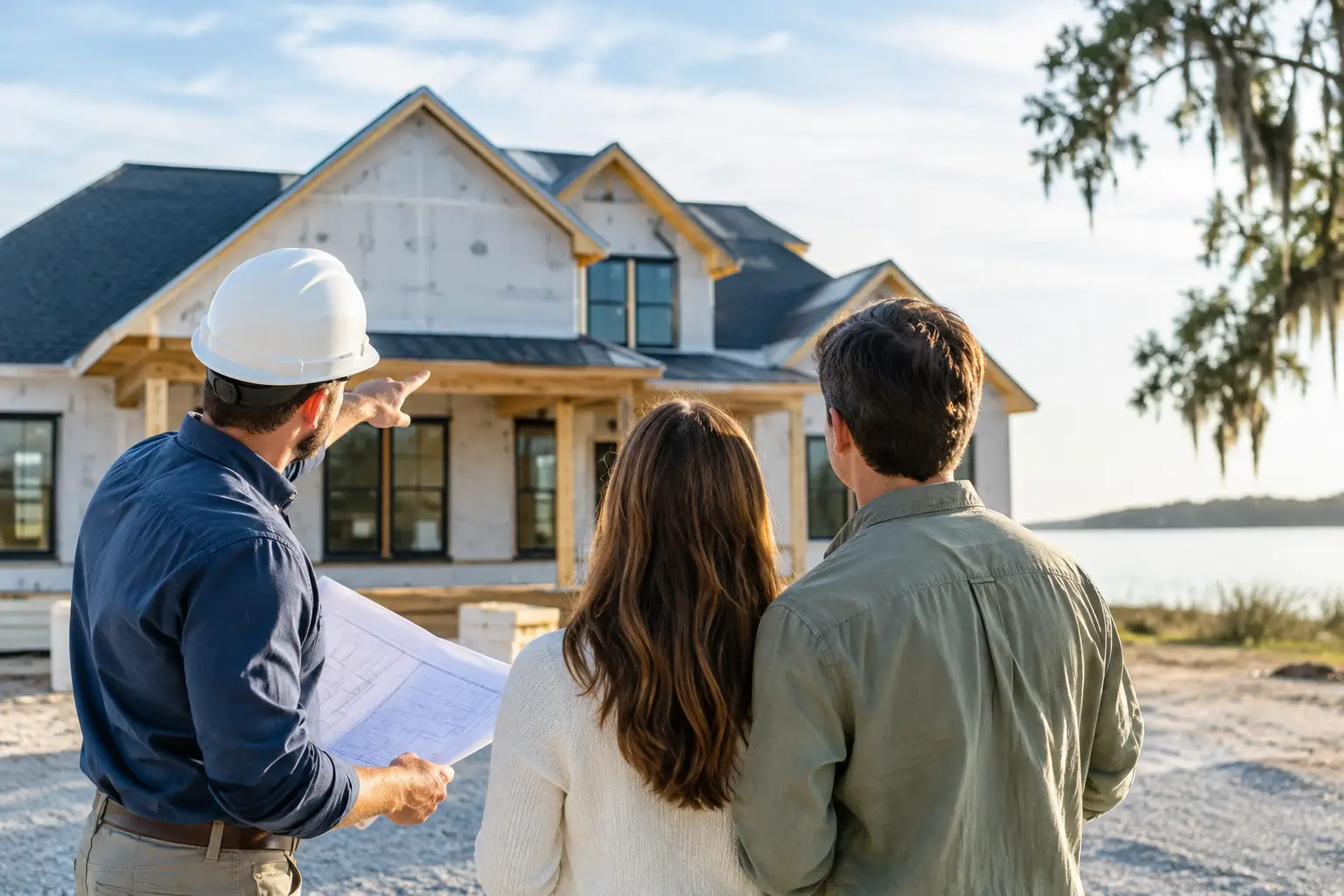
Choosing a Custom Home Builder in Southeast Louisiana

A custom home is not a standard plan with a few finish selections changed at the end. It is a series of decisions made well before the slab is poured: where the home sits on the lot, how it handles drainage, which materials fit the budget, and how the rooms work for the people living there. Choosing a custom home builder in Southeast Louisiana means finding someone who can manage those decisions with local conditions in mind.
From St. Tammany Parish to Orleans and Jefferson Parishes, homeowners face different site conditions, permitting requirements, flood considerations, and neighborhood rules. A well-built home begins with clear expectations and a contractor who understands that construction is not just about building walls. It is about coordinating people, materials, schedules, inspections, and details that are difficult to change later.
Start With the Site, Not the Floor Plan
Many homeowners fall in love with a floor plan before they understand what their property will require. That can create problems when the house needs to be raised, the lot has drainage challenges, utility connections are farther away than expected, or setbacks limit where the home can sit.
In Southeast Louisiana, elevation and water management are often central to the project. Depending on the property, the home may need to meet specific flood-elevation requirements, include appropriate foundation systems, or account for existing drainage patterns. These factors affect the design, budget, and construction schedule. They should be discussed early, not after plans are complete.
A builder should review the property alongside the preliminary plan. That conversation can identify practical issues such as driveway access for construction equipment, tree removal, soil conditions, lot clearing, and the location of water, sewer, or electrical service. A beautiful plan still has to fit the land and the local requirements.
What a Custom Home Builder in Southeast Louisiana Should Manage
Custom construction has many moving parts. Homeowners may work with an architect or designer, but the builder is usually responsible for turning the finished plans into a coordinated construction project. That includes obtaining permits, scheduling qualified subcontractors, ordering materials at the right time, monitoring workmanship, and handling inspections.
Good project management matters because one delay can affect several trades. If framing falls behind, rough mechanical work may move back. If cabinets arrive late, countertop installation and final plumbing can be delayed. Some issues are unavoidable, especially with weather or product availability, but they should be communicated clearly rather than ignored.
A dependable contractor should also help distinguish between an allowance and a fixed cost. Allowances are commonly used for selections such as lighting, plumbing fixtures, tile, appliances, or countertops when final products have not been chosen. They are useful, but homeowners need to understand what the allowance covers. Choosing products above that amount changes the project cost, while selecting within it helps protect the budget.
Build the Budget Around Real Decisions
The starting question is often, “What does it cost per square foot?” That number can offer a rough comparison, but it cannot define the cost of a truly custom home. Two houses with the same square footage can have very different prices based on foundation needs, roof complexity, window packages, cabinetry, finish levels, site work, and mechanical systems.
A more useful budget conversation starts with priorities. Decide where the home needs to perform at a higher level and where simpler choices make sense. For one family, that may mean a durable kitchen and larger covered outdoor area. For another, it may mean aging-in-place features, a home office, or a generator-ready electrical setup.
It also helps to reserve a contingency for items that cannot be fully known until work begins. Existing site conditions, utility requirements, and owner-requested changes can add cost. A contingency is not a license for loose estimating. It is a realistic part of planning for a complex project.
Be cautious of a proposal that looks significantly lower than others without a clear explanation. The difference may be legitimate, but it may also mean some work, materials, or site costs were not included. Comparing proposals line by line is more useful than comparing only the bottom number.
Plans Need Enough Detail Before Construction Begins
Starting construction with incomplete selections or vague details is one of the fastest ways to create delays and change orders. The more decisions that are resolved before work begins, the easier it is to price the project accurately and keep crews moving.
Before construction starts, homeowners should have a clear understanding of the scope of work, major materials, allowances, payment schedule, expected timeline, and process for changes. This does not mean every paint color must be selected on day one. It does mean that structural choices, major layout decisions, windows, exterior materials, and key mechanical requirements should be settled as early as possible.
Changes are sometimes necessary. A homeowner may see a room framed and decide a doorway should move, or a product may become unavailable. The right approach is to document the change, discuss cost and schedule effects, and approve it before the work proceeds. Clear change-order practices protect both the homeowner and the contractor.
Communication Should Be Consistent and Direct
Homeowners do not need to be construction experts, but they should never feel left out of their own project. Regular communication gives them a realistic picture of progress, upcoming decisions, inspections, and any issues that need attention.
At the same time, custom construction requires patience. Weather can stop exterior work. Inspections occur on the inspector's schedule. Specialty products may have longer lead times. A professional builder does not promise that none of these things will happen. Instead, they explain the situation, outline the next step, and keep the project moving where possible.
It is also worth asking who will be the day-to-day contact. On a custom build, homeowners benefit from knowing who is managing the job site, answering questions, coordinating subcontractors, and tracking the schedule. That relationship is especially valuable when decisions need to be made quickly.
Look Beyond the Finished Photos
Finished kitchens and exterior elevations are helpful, but they only show part of a builder's work. Ask about the process behind the photos. How are subcontractors selected and supervised? How are jobs kept organized? How does the contractor address a problem found during construction? What is the process for final punch-list work?
Licensing and insurance should be verified, and homeowners should feel comfortable asking direct questions about experience with homes similar to theirs. Building in a flood-prone area, renovating an older New Orleans property, and constructing on the Northshore can each require different planning and coordination.
A good builder will not pretend every project is identical. Some clients arrive with complete architectural plans and detailed selections. Others need help shaping the project from the earliest planning stage. The level of involvement can differ, but honest communication and careful management should not.
Give the Project a Strong Start
The best time to prevent expensive surprises is before construction begins. Take time to review the property, complete the plans, establish a realistic budget, and choose a contractor who answers questions plainly. At Triple Star Construction & Consultation, that early planning is treated as part of the work, because a home built for Southeast Louisiana should be prepared for the way you live and the conditions it will face for years to come.


Comments