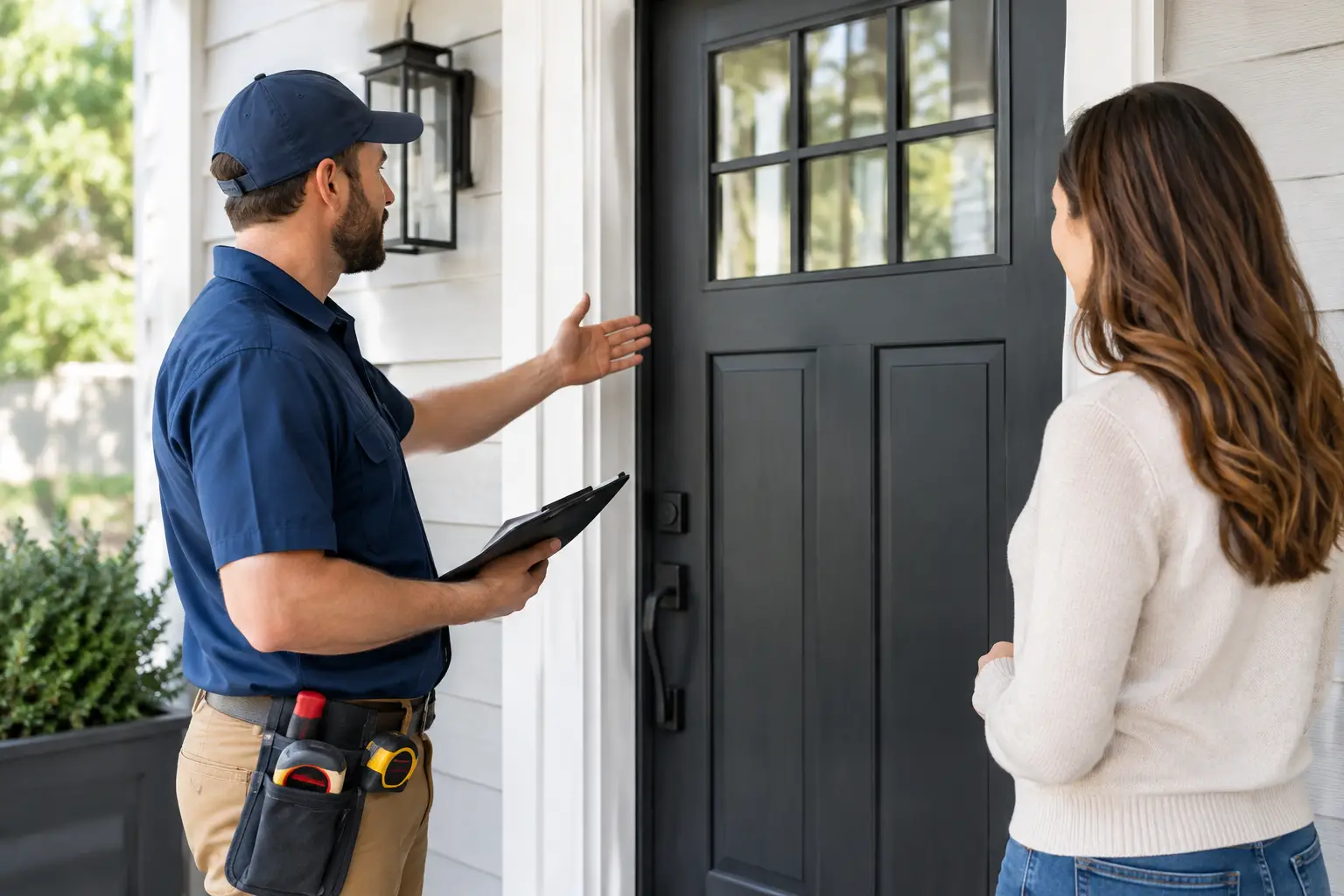
Hiring an Exterior Door Replacement Contractor

A new exterior door can make a house feel more secure, quieter, and better protected from the weather. But the door itself is only part of the job. An experienced exterior door replacement contractor evaluates the entire opening, including the frame, threshold, surrounding trim, flashing, and the wall conditions that may be hiding behind the old unit.
That matters in Southeast Louisiana. Heavy rain, humidity, intense sun, shifting soil, and wind-driven weather can expose weak installation details quickly. A door that looks good on installation day may still leak, bind, or allow air into the home if the opening was not properly prepared.
What an Exterior Door Replacement Contractor Should Handle
Replacing an exterior door is not simply a matter of removing one slab and hanging another. In some homes, particularly older homes or houses that have settled over time, the opening may no longer be square. The existing sill may have deteriorated, the jamb may be out of plumb, or there may be water damage beneath the threshold.
A qualified contractor begins by measuring the opening and determining whether a replacement slab will work or whether the full prehung unit should be replaced. A slab-only replacement can make sense when the existing frame is in excellent condition and matches the new door. More often, a full unit provides a better long-term result because the jamb, weatherstripping, hinges, threshold, and door are designed to work together.
The contractor should also inspect the exterior trim and siding or masonry around the opening. Water intrusion does not always show up as a visible stain inside the house. Soft wood at the sill, damaged trim, deteriorated caulk, or a loose threshold can all point to a larger issue that needs to be addressed before the new door goes in.
Why Installation Details Matter More Than Homeowners Expect
An exterior door has to do several jobs at once. It needs to operate smoothly, lock securely, resist rain, limit drafts, and stand up to daily use. Those goals depend on precise installation.
The frame must be set level, plumb, and square. If it is not, the door may swing open or shut on its own, rub against the jamb, or leave uneven gaps around the weatherstripping. Shims need to support the frame in the right locations, especially near hinges and strike plates, rather than simply filling open space.
The threshold and sill are equally important. A properly installed door needs a durable, continuous surface beneath the threshold and a water-management approach that directs water outward. Caulk alone is not a substitute for proper flashing, sill preparation, and exterior trim details. Caulk eventually ages, cracks, or separates, particularly under Louisiana sun and moisture.
For doors exposed to frequent rain, a contractor may recommend an overhang, storm door, or improved drainage at the entry. Those additions are not necessary for every opening, but they can help protect a door that receives direct weather.
The difference between an air leak and a water leak
Homeowners often notice a draft first. You may feel air around the latch side of the door, see daylight at the corners, or notice a higher utility bill during hot weather. These issues can come from worn weatherstripping, an improperly adjusted strike plate, or a door frame that has moved.
Water is more serious. If rain enters at the threshold or around the frame, the source may be above, beside, or below where the water appears indoors. A good contractor does not just add more caulk and hope for the best. The goal is to identify how water is getting behind the exterior surface and correct the conditions causing it.
Choosing the Right Door for Your Home
Material, style, exposure, budget, and security needs all affect the right choice. Fiberglass doors are popular because they resist dents and moisture well, can be insulated, and are available in smooth or wood-grain finishes. Steel doors are often a practical, cost-conscious choice for security and durability, although deep scratches should be addressed before rust develops.
Wood doors offer a traditional appearance and can be a good fit for certain architectural styles. They also require more maintenance in our climate. Sun, humidity, and direct rain can affect the finish and cause movement over time. A wood door may be worth the upkeep for the right home, but homeowners should go into that decision with realistic expectations.
Glass panels can bring natural light into an entry, but they involve trade-offs. Decorative or impact-rated glass can add cost, and large glass areas may affect privacy and heat gain. For a front entry exposed to afternoon sun, the glass type, tint, and shading around the opening deserve careful consideration.
Security is another factor. A quality deadbolt installed into solid framing provides more protection than a decorative lock installed into weak or damaged jamb material. If the home has older framing around the door, reinforcing the lock area may be part of the replacement scope.
Questions to Ask Before Hiring a Contractor
The best conversations happen before materials are ordered. Ask whether the contractor plans to replace the complete unit or only the slab, and ask why that approach is appropriate for your opening. You should also ask how they will address any damaged wood, what is included for exterior and interior trim, and whether painting or finishing is part of the quoted work.
It is reasonable to ask how the door will be protected from rain during installation, especially if the work takes place during an unsettled weather period. For a straightforward replacement, the opening is usually exposed for a limited time. Still, planning matters when weather is unpredictable or when hidden damage could extend the work.
A clear proposal should identify the door type, hardware allowance or selected hardware, trim work, disposal of the old door, and repairs that are included. Some conditions cannot be confirmed until the old unit comes out. In that case, the contractor should explain how concealed rot or framing damage would be handled and priced if discovered.
Be cautious of a quote that is dramatically lower than others without a clear explanation. It may exclude necessary trim, repairs, finishing, quality hardware, or the labor required to properly prepare the opening. The least expensive installation can become costly if a leaking threshold damages flooring, framing, or interior finishes later.
When Door Replacement Becomes a Larger Repair
Not every exterior door replacement turns into a renovation, but it can. This is common when an old door has leaked for years, when termite damage is present, or when previous work covered up deteriorated material instead of repairing it.
If the wall framing, subfloor, brick molding, or exterior cladding needs attention, it is usually better to address it while the opening is accessible. Trying to preserve damaged material to keep the job small often creates a short-term fix. The right scope depends on what is found, but sound framing and a properly supported threshold should come before cosmetic trim.
This is also an opportunity to consider related improvements. A homeowner may decide to update sidelights, add a storm door, improve exterior lighting, or repair nearby soffit and trim. Combining work can be efficient, though it should not be done simply because the contractor is already there. Each addition should serve a clear purpose and fit the project budget.
Planning Your Door Project in Southeast Louisiana
For homeowners in St. Tammany, Orleans, and Jefferson Parishes, product lead times and weather are practical scheduling considerations. Special-order doors, sidelights, custom sizes, and decorative glass can take longer than standard units. Ordering the correct product after careful measurement is more important than rushing to select something that is readily available.
Before installation, clear the entry area inside and out. Remove rugs, furniture, wall décor close to the opening, and anything that could be affected by dust or foot traffic. If the door includes electronic hardware, make sure the contractor knows ahead of time so the installation and setup can be coordinated.
Triple Star Construction & Consultation approaches door work the same way it approaches larger home projects: with a clear scope, careful site evaluation, and honest communication about what the existing conditions require. A properly replaced exterior door should look finished, operate correctly, and protect the opening behind it.
If your current door sticks, leaks, shows rot around the frame, or no longer feels secure, start with an inspection of the full opening rather than a quick cosmetic fix. The right contractor will help you understand the condition of the entry, the options that fit your home, and the work needed to make the replacement last.


Comments