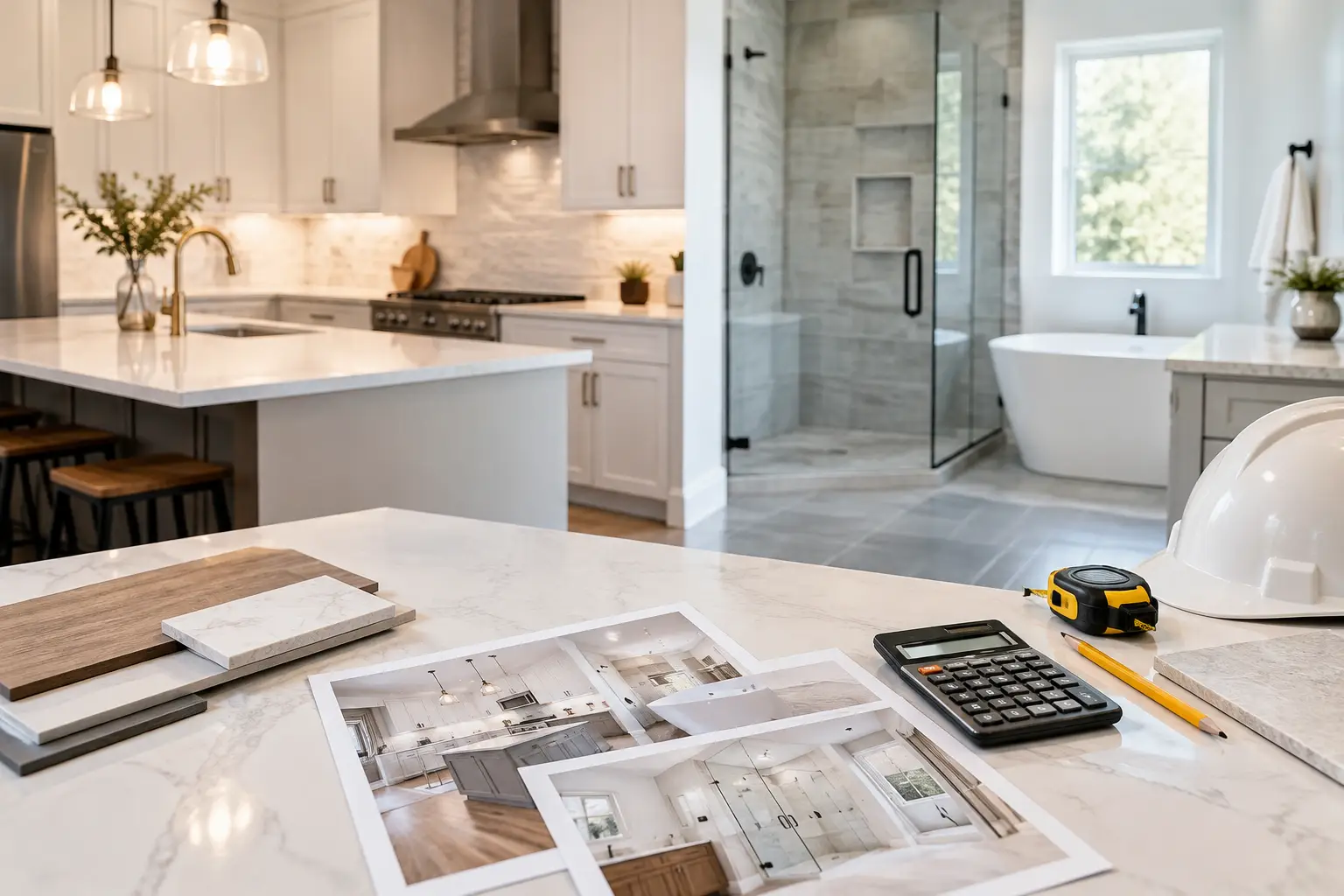
How Much Does a Kitchen and Bathroom Remodel Cost?

A dated kitchen and a worn-out bathroom can make an otherwise solid home feel like it no longer works for your family. Homeowners often ask, “How much does a kitchen and bathroom remodel cost?” The honest answer is that the final number depends on the scope, the home’s condition, the materials you choose, and how much work is hidden behind the walls.
For homeowners in Southeast Louisiana, a combined kitchen and bathroom renovation commonly starts around $55,000 for straightforward, mid-range work and can move well beyond $130,000 for larger spaces, extensive layout changes, premium finishes, or older-home repairs. A careful plan matters more than finding the lowest initial number. Remodeling is a major investment, and a realistic budget helps protect both the project and the homeowner.
Typical Kitchen and Bathroom Remodel Cost Ranges
A kitchen remodel is usually the larger portion of the budget. In many Southeast Louisiana homes, a modest kitchen renovation with stock or semi-custom cabinets, standard countertops, updated lighting, new flooring, and limited plumbing or electrical changes may fall in the $35,000 to $60,000 range. A more complete kitchen remodel often runs from $60,000 to $100,000 or more, particularly when it includes custom cabinetry, quartz or natural-stone countertops, a large island, appliance upgrades, or a revised layout.
Bathroom costs vary considerably by size and function. A hall bathroom with a new tub or shower surround, vanity, tile, fixtures, flooring, and paint may range from $18,000 to $35,000. A primary bathroom remodel with a tiled walk-in shower, glass enclosure, double vanity, upgraded plumbing fixtures, improved lighting, and custom storage can reasonably range from $30,000 to $60,000 or more.
When both rooms are remodeled at the same time, there can be some efficiencies in scheduling, material deliveries, and coordination. Still, the combined total is not simply the cost of new cabinets and tile. Demolition, permits, trades, protection of the existing home, supervision, and the work required to make everything function properly are all part of a professionally managed renovation.
What Drives the Cost of a Kitchen and Bathroom Remodel?
The biggest cost factor is usually the amount of change involved. Keeping a kitchen sink, range, and refrigerator in their existing locations can reduce plumbing, gas, electrical, and flooring work. Moving those items may improve the layout, but it adds labor and often requires opening walls or floors. The same is true in a bathroom. Relocating a toilet or converting a tub area into a large shower can be worthwhile, but it should be budgeted as a construction change, not a cosmetic update.
Cabinetry is another major kitchen expense. Stock cabinets can help keep a project within a moderate budget, while semi-custom and custom cabinets offer more choices in sizing, finish, storage, and layout. Custom work can be the right choice for an unusual room, a historic home, or a homeowner who wants every inch used well. It is not automatically necessary for every kitchen.
Finish selections add up quickly. Tile, countertops, plumbing fixtures, appliances, lighting, hardware, mirrors, shower glass, and flooring all have a wide range of price points. A $3,000 appliance package and a $15,000 appliance package both provide working appliances, but they create very different budgets. The key is deciding early where higher-quality materials will make a meaningful difference in everyday use and where a practical selection makes more sense.
Labor is also a significant part of the cost, and it should be. Kitchen and bathroom work involves several skilled trades: demolition crews, carpenters, plumbers, electricians, drywall finishers, painters, tile installers, countertop fabricators, and sometimes HVAC professionals. Coordinating these trades in the right order is one of the primary jobs of a general contractor.
The Condition Behind the Walls
Older homes in New Orleans, Slidell, Covington, Mandeville, and surrounding communities can hold surprises. Water damage around a shower pan, termite damage, outdated wiring, deteriorated cast-iron plumbing, uneven subfloors, or framing that does not meet current needs may not be visible until demolition begins.
That does not mean every remodel will uncover a major problem. It does mean homeowners should set aside a contingency fund, commonly 10% to 20% of the construction budget, especially for older homes or projects involving layout changes. A responsible contractor does not ignore potential unknowns just to make an estimate look attractive.
Southeast Louisiana Considerations
Our local climate and building conditions can affect remodeling decisions. Moisture control is especially important in bathrooms, where proper waterproofing behind tile is not optional. A beautiful shower can fail early if the preparation behind the finished surface is not done correctly.
In flood-prone areas or homes that have experienced storm damage, previous repairs may also affect what is found during demolition. Permit requirements, elevation considerations, insurance-related repairs, and code upgrades can change the scope. These details are best addressed during planning rather than after materials have been ordered.
Where Homeowners Can Save Without Cutting Corners
Saving money on a remodel should not mean skipping waterproofing, electrical upgrades, permits, or qualified labor. Those are areas where shortcuts can create expensive problems later. Better savings usually come from making clear, intentional choices before construction begins.
Keeping the existing footprint is one of the most effective ways to control cost. Selecting quality mid-range fixtures instead of designer-brand fixtures can also free up budget for more important work, such as cabinetry, tile installation, or electrical improvements. In a bathroom, a well-built acrylic tub or a properly installed porcelain tile selection may be a better investment than an elaborate feature that strains the budget.
It also helps to avoid changing selections once work is underway. Changes are sometimes necessary, but last-minute decisions can delay the schedule and add cost. Finalizing cabinets, tile, fixtures, appliance specifications, and lighting before construction starts gives the contractor a clearer path to manage the work.
Why Estimates for the Same Project Can Look So Different
If one contractor’s estimate is substantially lower than the others, look beyond the bottom-line figure. One proposal may include demolition, permits, design coordination, material allowances, project management, and disposal, while another may leave several of those items out. A low number can become a higher final cost when important work was never included in the original scope.
Ask what is specifically included for cabinetry, countertops, tile, plumbing fixtures, electrical work, painting, and cleanup. Clarify who purchases materials, how change orders are handled, and whether the contractor is licensed and insured. A detailed scope does not eliminate every unknown, but it gives everyone a shared understanding of what is being built.
Planning a Budget That Fits Your Home
Start by separating your needs from your wish list. If the kitchen has poor storage, inadequate lighting, and failing cabinets, those functional issues should guide the plan. If the bathroom has a leaking shower or unsafe flooring, correcting those items should come before decorative upgrades.
Then establish a comfortable investment range rather than one rigid number. Your contractor can help shape the scope around that range and explain the trade-offs. For example, you may choose to keep the kitchen layout but invest in better cabinets, or you may simplify tile selections to make room for a larger shower.
A kitchen and bathroom remodel should feel considered, not rushed. At Triple Star Construction & Consultation, we encourage homeowners to discuss the home’s condition, their priorities, and their budget early so the plan reflects real construction costs before work begins. A clear scope, dependable scheduling, and straightforward communication are often just as valuable as the finishes you select.
The best next step is a site visit and a practical conversation about what you want to change, what the home may require, and what level of investment makes sense for your family. That is where a realistic remodel budget starts.


Comments