How to Hire the Right Siding Repair Contractor

A siding repair contractor is often called after a homeowner notices a loose panel, soft spot, water stain, or section of trim that no longer sits straight. Those visible problems matter, but they are not always the full repair. In Southeast Louisiana, heat, heavy rain, humidity, wind-driven storms, and termites can allow a small opening in exterior cladding to turn into damaged sheathing, framing, or insulation behind it.
The right contractor does more than replace what can be seen from the driveway. They identify why the siding failed, explain the condition behind it, and recommend a repair that fits the home, the budget, and the expected life of the existing exterior.
Start With the Cause, Not Just the Damaged Board
Siding is part of a larger wall system. It sheds water, protects the structure from weather, and works alongside flashing, house wrap, caulking, windows, doors, soffits, and gutters. When one component fails, water can travel behind the siding and show up somewhere else.
For example, a rotted section of wood siding below a window may have been caused by failed window flashing, not simply an aging board. A warped vinyl panel may point to improper installation, excessive heat exposure, or missing fasteners. Fiber cement siding that is swelling at its lower edge may be sitting too close to a roof, porch, grade, or hard surface where it repeatedly absorbs moisture.
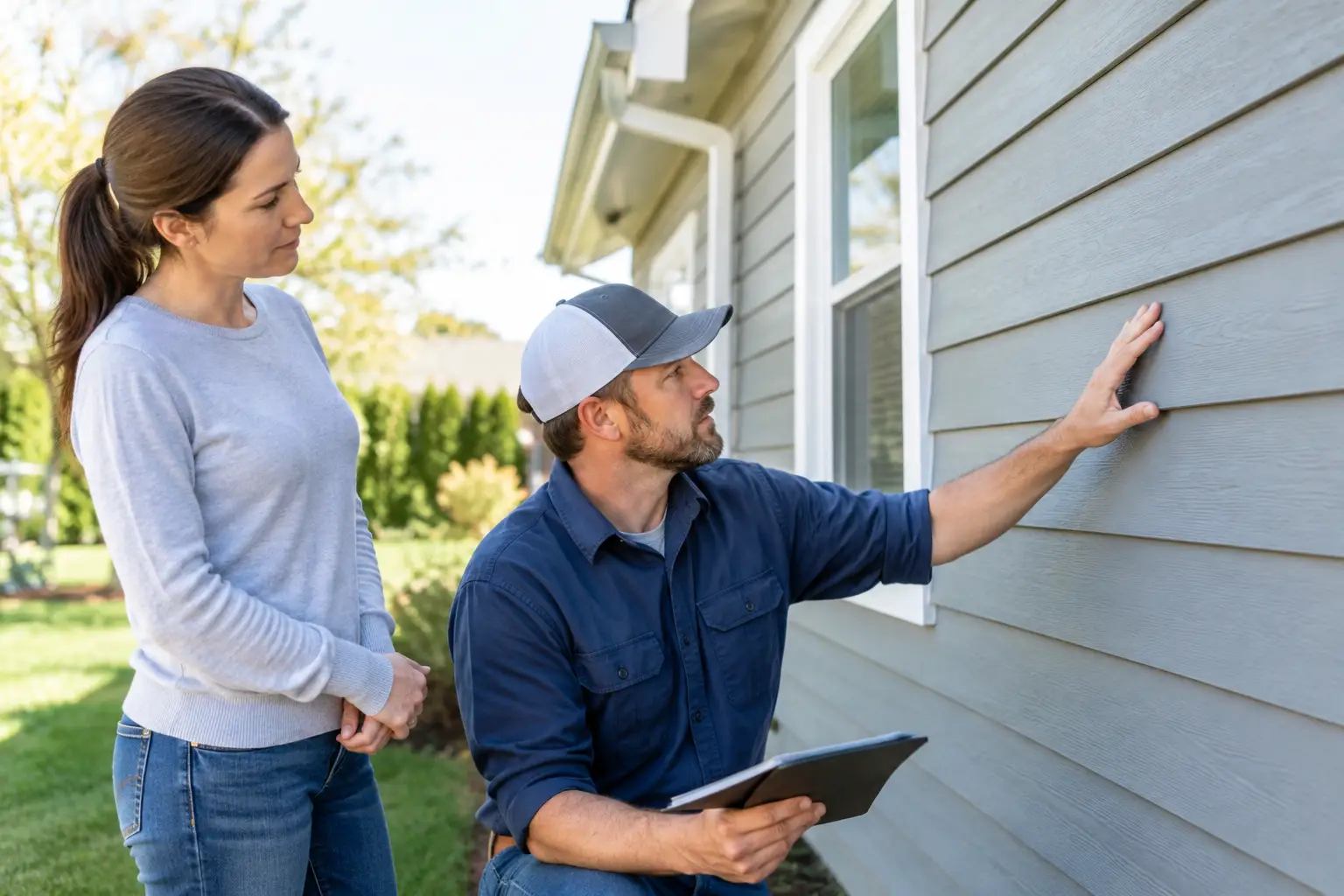
A careful inspection should look at the surrounding area, not only the most obvious damage. That may include checking trim joints, roof-to-wall intersections, kick-out flashing, gutters, window and door openings, and the bottom edge of the siding. If moisture has gotten behind the material, the contractor may need to remove enough siding to inspect the sheathing and framing before giving a final scope of work.
That process can feel less convenient than receiving a quick price for a few replacement boards. It is also the better way to avoid paying for a cosmetic patch while the source of the damage remains in place.
What a Siding Repair Contractor Should Evaluate
A qualified siding repair contractor should be willing to explain what they see in plain language. Homeowners do not need a lesson in every construction term, but they should understand the condition of the exterior and the proposed fix.
During an evaluation, ask how the contractor will determine whether there is damage behind the siding. A visual inspection may be enough for a small, isolated impact repair. In other cases, limited removal is necessary to see whether the house wrap, sheathing, insulation, or wall framing has been affected.
The contractor should also consider whether the existing siding can be matched. With older vinyl, painted wood, fiber cement, or engineered wood products, an exact match may not be available. Sun exposure and weathering change color over time, even when the original product is still manufactured. A straightforward contractor will discuss that possibility before work starts and offer practical options, such as painting a repaired elevation or replacing a larger, more natural-looking section.
Permits are another item worth discussing. A minor siding repair may not require one, while more extensive work involving structural repairs, major exterior changes, or work in a regulated area may. Requirements can vary among St. Tammany, Orleans, and Jefferson Parishes and by municipality. Your contractor should help clarify what applies to the scope, rather than making assumptions.
Questions to Ask Before You Sign a Contract
The best conversations with a contractor are specific. Instead of asking only, “How much will it cost?” ask what is included, what could change, and how those changes will be handled.
A written proposal should identify the damaged areas, materials to be used, and the work needed to remove and replace siding. It should also address related items such as trim, flashing, sealants, house wrap, paint, debris removal, and protection of landscaping or nearby surfaces. If repairs behind the siding are possible but cannot be confirmed until the exterior is opened, the proposal should explain that condition clearly.
Ask who will perform the work and who will supervise it. Siding repairs often involve several trades or related tasks, especially when rot, windows, roofing details, or exterior painting are involved. A general contractor can coordinate those pieces and keep the repair from becoming a series of disconnected jobs.
It is reasonable to ask for proof of licensing and insurance, a realistic start schedule, payment terms, and a written warranty on workmanship. Be cautious with a contractor who pressures you to make an immediate decision, requests a large payment before materials or work are scheduled, or offers a vague estimate with little detail. Low initial pricing can become expensive if essential prep work, flashing, or cleanup was never included.
Repair, Partial Replacement, or Full Replacement?
Not every damaged exterior requires a full siding replacement. When damage is limited to a few areas and the rest of the siding is sound, a focused repair can be a sensible investment. This is common after wind damage, an isolated leak, or localized wood rot around a window or door.
Partial replacement may make more sense when one elevation has substantial wear from sun and weather while the rest of the home remains in good condition. It can also be appropriate when an addition or renovation requires new siding that must blend with the existing house.
Full replacement becomes worth considering when problems are widespread: repeated rot, extensive cracking, failing caulk joints, multiple water entry points, old siding near the end of its service life, or repairs scattered across several elevations. At that point, repeated spot repairs may not be the most cost-effective path. A full replacement allows the contractor to address weather protection consistently and correct installation issues across the exterior.
The decision depends on the material, the age of the home, the available match, and what is found behind the siding. A good recommendation should acknowledge those trade-offs instead of treating replacement as the answer to every repair call.
Louisiana Weather Makes Details Matter
In our area, siding repairs need to account for more than appearance. Humidity slows drying. Heavy rain tests every joint and penetration. Hurricanes and strong thunderstorms can drive water into places that may stay dry during a normal shower. High temperatures also cause materials to expand and contract.
That is why proper flashing and water-resistive barriers matter as much as the siding itself. Flashing directs water outward at windows, doors, roof intersections, and horizontal trim. House wrap or another approved water-resistive barrier provides a secondary layer of protection behind the cladding. Caulk has a role, but it is not a substitute for correct flashing.
For wood-based materials, proper clearance from grade, roofing, and masonry is especially important. Siding installed too close to the ground can wick moisture and create an easy path for insects. For fiber cement, correct fasteners, joint treatment, and paint maintenance affect long-term performance. Vinyl siding needs room for movement and should not be nailed so tightly that panels cannot expand and contract.
These may sound like small installation details. Over time, they are often the difference between a repair that holds up and one that needs attention again after a few seasons.
Plan for the Work Around Your Home
Siding repair is usually less disruptive than a major interior renovation, but it still requires planning. Contractors may need access around the home, space for ladders or scaffolding, and a location for materials and debris. Move patio furniture, grills, outdoor decor, and vehicles away from the work area before the crew arrives.
If the repair involves power tools, removal of damaged sheathing, or work around windows, expect some noise and temporary disruption. Keep pets indoors or away from the work zone. Let the contractor know about irrigation lines, delicate landscaping, gates, or access concerns before work begins.
Communication is particularly valuable if unexpected conditions are found after siding is removed. The contractor should document the issue, explain the options, and discuss cost or schedule changes before moving forward whenever possible. Construction can reveal hidden damage, but that should never become an excuse for unclear pricing or poor communication.
Choose Clear Communication Over a Quick Patch
A quality siding repair protects more than curb appeal. It helps preserve the wall system underneath and can prevent a manageable exterior issue from becoming a larger renovation later. The most useful contractor is one who takes the time to inspect the cause, put the scope in writing, and explain where repair ends and replacement begins.
For homeowners in Southeast Louisiana, Triple Star Construction & Consultation can help evaluate siding concerns as part of a larger exterior repair or renovation plan. The right next step is not always the biggest project. It is the one that addresses the problem honestly, protects the home from further moisture intrusion, and gives you a clear understanding of the work ahead.


Comments