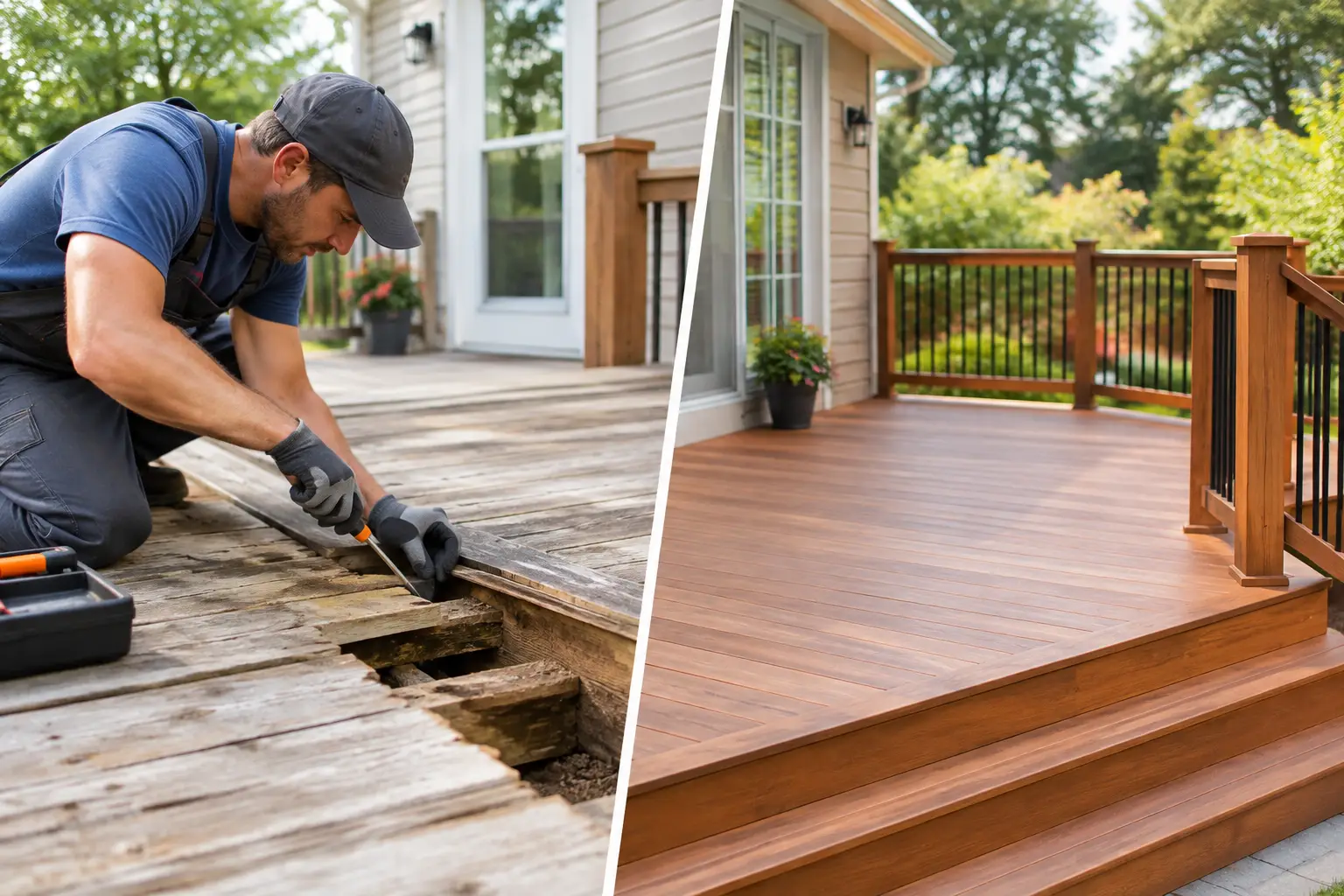
When Deck Repair or Replacement Makes Sense

A deck can look acceptable from the yard and still have problems where they matter most: at the ledger board, around post bases, beneath stair landings, or inside old fastener holes. For Southeast Louisiana homeowners weighing deck repair or replacement, the right answer usually comes down to more than a few loose boards. The condition of the structure, the extent of moisture damage, and your plans for the home all deserve a close look before money is spent.
Our heat, heavy rain, humidity, and storm exposure are hard on exterior wood. A practical repair can add years of safe use to a well-built deck. But covering serious rot with new decking only postpones a larger, more expensive problem. The goal is not to choose the cheapest option today. It is to make a sound decision based on what is actually supporting the deck.
Start With the Structure, Not the Surface
Deck boards are the most visible part of the deck, so they tend to get the most attention. They are also the components most likely to wear out first. Sun exposure, standing water, foot traffic, and neglected maintenance can leave boards splintered, cupped, cracked, or soft long before the framing has reached the end of its service life.
If the joists, beams, posts, footings, and connections are solid, replacing surface boards and railings may be a sensible repair project. This approach can improve safety and appearance without paying to rebuild components that remain in good condition.
The concern is that surface problems can hide structural problems. A contractor should inspect underneath the deck, not simply walk across the top of it. They should look for soft or deteriorated wood at joist ends, rusted hangers, loose connections, sagging spans, damaged posts, and signs that the deck has shifted away from the house.
The ledger board deserves particular attention. This is the board that attaches the deck framing to the home. If it was improperly flashed, fastened incorrectly, or affected by water intrusion, the issue may extend beyond the deck itself. Water can damage the siding, wall sheathing, and framing behind it. That is not a repair decision to make based on a quick visual estimate.
When Deck Repair Is Usually the Better Choice
Repair is often appropriate when the damage is limited and the original deck was built with sound framing and proper support. A deck may be a good candidate for repair when only a portion of the boards are failing, the railings need updating, or individual steps and handrails have become loose.
For example, a homeowner may have a treated lumber deck with several cracked boards near a grilling area and a weathered handrail. If the framing below is dry, properly supported, and free of decay, replacing the affected boards and rebuilding the rail section can be a straightforward project.
Minor drainage corrections can also protect a repair. Downspouts that discharge at the base of deck posts, soil that holds water against framing, or a lack of airflow beneath a low deck can all shorten the life of new materials. Addressing those conditions while making repairs helps avoid repeating the same problem a few years later.
Repair can make particular sense if you expect to sell the home soon or if a larger renovation is planned later. In that situation, a safe, clean, properly finished deck may be the practical investment. It does not always make financial sense to build a premium new deck if the property will soon undergo major changes.
That said, repair should not mean patching around unsafe conditions. Replacing a few boards is reasonable. Replacing a few boards every season because the deck is deteriorating throughout is usually not.
Signs Deck Replacement Is the Smarter Investment
Replacement becomes the better path when the problems are widespread, structural, or tied to an outdated design. A deck that feels bouncy, slopes noticeably, has sagging beams, or shows extensive rot in the joists and posts should be evaluated for rebuilding rather than cosmetic repair.
Watch for recurring trouble in several areas at once. Soft decking, loose railings, corroded connectors, cracked posts, and deteriorated stairs can indicate a deck that is nearing the end of its useful life. A single issue may be repairable. Several issues often point to a system that no longer makes sense to preserve.
Older decks may also fall short of current safety expectations. Guardrail height and spacing, stair geometry, handrails, attachment methods, and footing requirements have changed over time. Local permit and code requirements can apply differently depending on the scope of work, but a significant rebuild is a good opportunity to correct known safety concerns rather than recreate an outdated layout.
Replacement also gives homeowners room to rethink how they use the space. Perhaps the deck is too small for family gatherings, stairs land in an awkward location, or the existing layout does not work with a planned kitchen addition, pool, or backyard renovation. Rebuilding allows the structure, access points, railings, lighting, and materials to be planned together instead of forcing upgrades onto an old footprint.
In Southeast Louisiana, a new deck should also account for water management from the beginning. Proper flashing, adequate ventilation, appropriate ground clearance, durable connectors, and thoughtful drainage are not extras. They are part of building a deck that can hold up in a wet, humid climate.
Comparing the Real Cost of Repair and Replacement
The lower estimate is not always the lower cost over time. A repair may cost less now, but if the remaining structure is already compromised, you could be paying again for demolition and rebuilding within a short period. On the other hand, replacement is not automatically the responsible recommendation just because it creates a larger project.
A useful comparison looks at the condition of what will remain after repairs are complete. If new boards are installed over framing that may need replacement in two or three years, the labor invested in the new surface could be lost. If the framing has many years of service left, a targeted repair can be money well spent.
Material choices affect the budget as well. Pressure-treated lumber is common and can perform well when it is properly installed and maintained. Composite decking can reduce routine maintenance and offer a more consistent appearance, but it costs more up front and still needs sound framing beneath it. Railings, stairs, lighting, fascia, and access to the work area can also have a meaningful effect on project cost.
Homeowners should ask for an estimate that separates necessary structural work from optional upgrades. That makes it easier to see what is required for safety and what is being chosen for appearance, maintenance preferences, or future use. It also helps avoid the frustration of comparing one contractor's repair price to another contractor's rebuild price without understanding the difference in scope.
A Thorough Inspection Prevents Guesswork
Before deciding on deck repair or replacement, take the time to have the deck evaluated from the ground up. A proper assessment should include the deck surface, framing, posts, footings, ledger connection, railings, stairs, hardware, and the way water moves around the structure.
The inspection should also consider the home. If the deck connects to brick veneer, siding, or an exterior wall that has shown signs of moisture, the contractor may need to investigate further before recommending a repair. Replacing visible deck components without addressing water intrusion at the house can create a much larger issue later.
Photos and a clear explanation of findings are valuable. Homeowners should be able to understand which conditions are cosmetic, which require repair, and which make replacement the safer long-term choice. Good construction planning starts with honest information, not pressure to choose the biggest possible project.
Plan the Work Around Your Home and Your Future Needs
A deck project affects more than the deck itself. Access through the yard, landscaping, drainage, exterior paint, electrical needs, and the timing of other renovations should all be considered. If you are planning an addition or major backyard work within the next few years, it may be wise to coordinate those projects before finalizing a new deck design.
For homeowners in St. Tammany, Orleans, and Jefferson Parishes, weather planning matters too. Rain delays can happen, and material protection is part of responsible project management. A clear plan for demolition, disposal, temporary access, inspections when required, and final cleanup helps the job move with fewer surprises.
A repaired deck should feel secure and useful. A replacement deck should be designed to serve the way you actually live, not simply duplicate what was there before. If you are uncertain which path fits your property, a detailed site evaluation can give you the information needed to make a decision with confidence. Triple Star Construction & Consultation can help homeowners assess the condition of an existing deck and plan practical next steps for the home.


Comments